Speak with no fear
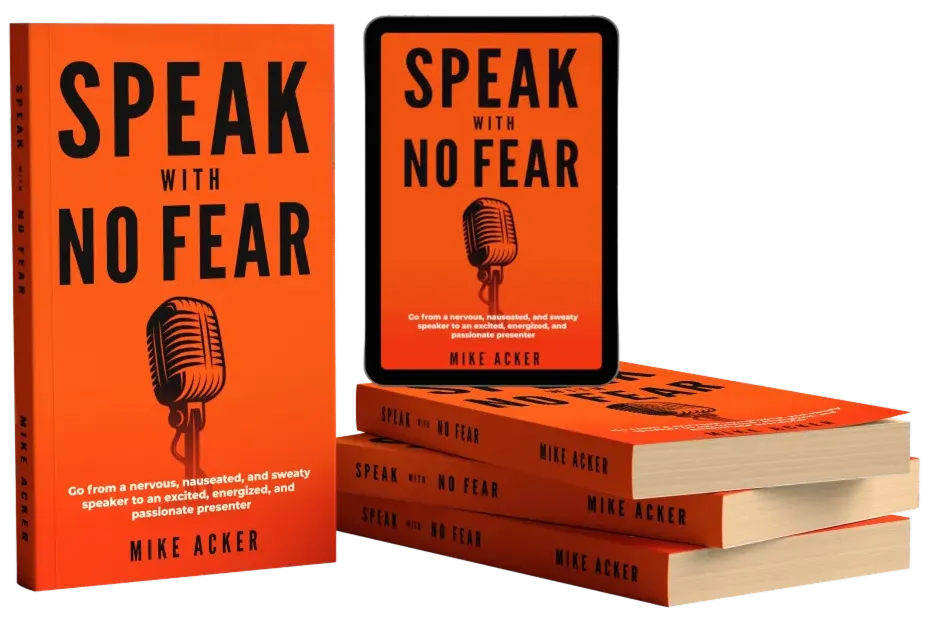
The Top-Rated Book in the World on Overcoming Fear of Speaking
With 1,700+ reviews across Amazon & Audible and readers in more than 50 countries.
Speak with No Fear has helped professionals, leaders, and everyday people transform the way they communicate.
Download the full audiobook for free, access resources, sign up for the mini-course or schedule a call for professional coaching and start speaking with more clarity and confidence today.




What’s inside
What You’ll Learn in the Top-Rated Speaking Confidence Book
Control Nervousness
Practical strategies to quiet the internal storm so you show up with calm and clarity.
Build Confident Presence
Learn the same skills thousands of readers use to speak with authority and authenticity.
Communicate to Influence
Go beyond confidence and learn how to structure messages that move people into action.
The perfect moment to work on your speaking won’t magically appear. Growth happens when you say “yes” before you feel prepared, when you lean into discomfort, and when you practice instead of hiding. It may challenge you, but it will absolutely transform you.
Confidence is built, not found. Take the first step.
Chapter 1
Uncover & Clean the Wound (excerpt)
Growing up, I was a tough little daredevil.
One of my stunts involved building a makeshift bike ramp out of branches and tools from my dad’s shed. I’d race toward it, crash spectacularly, wipe off the blood with my dirty hands, rebuild the ramp, and try again.
I didn’t want my mom to know what I was up to, so I wouldn’t always tell her about my injuries. But after a day or two, they’d start hurting worse and she’d notice me limping.
“What did you do this time, Mike? Show me!” she’d say.
I’d gingerly roll up my pant leg to reveal a big, nasty gash.
“Michael Acker, this is infected! Why didn’t you tell me?”
Mom would grab the first aid kit, clean out the wound, scrub away the dirt, and scold me about infection. Only after she was sure the cut was clean would she apply the Neosporin, bandage it up, and seal it with a kiss only a mom can give.
Speaking Wounds
In my years of coaching, I’ve made a surprising discovery.
Roughly two-thirds of people who are afraid of public speaking are carrying an emotional wound tied to a past speaking experience. They can usually point to a specific moment that marked the beginning of their fear.
Maybe it was a classroom presentation. A sales pitch that went sideways. Being laughed at. Being put on the spot.
That experience didn’t just hurt. It stuck.
Here’s a quick test. When you think about speaking, do you feel fear that’s disproportionate to the situation?
If so, you may have a speaking wound.
Time Doesn’t Heal Untreated Wounds
You might be thinking, “That was years ago. Time heals all wounds.”
It doesn’t.
Time only heals wounds that are treated. Untreated wounds don’t heal. They fester.
Ignoring a speaking wound is like putting a bandage over an infected cut. It might look fine on the surface, but underneath, it’s still doing damage.
That’s why this is the first strategy.
My Story
Before I joined a college debate team, I had the opportunity to speak to the student body about a project I was passionate about.
One-on-one, I was compelling. But standing on that stage, fear took over.
I rushed. I rambled. I panicked.
The president eventually put a hand on my shoulder and ended my speech early.
As I walked off stage, my only thought was this:
And for a long time, I didn’t.
Scars vs. Wounds
There’s a difference between a scar and a wound.
You can touch a scar without pain. A wound still hurts.
When you uncover a speaking wound and clean it out, it doesn’t disappear. It transforms.
The memory that once controlled you becomes a story you can use.
That’s the goal.
Take Action
At the end of each chapter, I’ll give you specific actions.
Here’s the first:
- Identify your most painful speaking memory
- Write it down in detail
- Name what you felt, not just what happened
- Ask what good, if any, came from it
This is how wounds begin to heal.
Where you are is not where you have to be.

"This book is focused on fear of public speaking but several of the strategies are more widely applicable."
The best part of Mike Acker's book is that he provides seven strategies to choose from rather than trying to force-fit everyone into one model.
These strategies range from the psychological to the spiritual to the practical and together cover all the syndromes I've encountered in my practice. The other element of this book I appreciate is the "Action" section that is part of each strategy. In other words, this isn't just an academic think-piece; it is a workbook for conquering fear.
This book is focused on fear of public speaking but several of the strategies are more widely applicable. And a couple strategies are good, practical advice on how to write and deliver a powerful speech. For example, "You Be You" is sound advice for anyone. "Speak to One" is imperative for all speakers. So the book is not narrow in scope but rather broad enough to cover the topic thoroughly and usefully.
Chapter 1
Uncover & Clean the Wound (excerpt)
Growing up, I was a tough little daredevil.
One of my stunts involved building a makeshift bike ramp out of branches and tools from my dad’s shed. I’d race toward it, crash spectacularly, wipe off the blood with my dirty hands, rebuild the ramp, and try again.
I didn’t want my mom to know what I was up to, so I wouldn’t always tell her about my injuries. But after a day or two, they’d start hurting worse and she’d notice me limping.
“What did you do this time, Mike? Show me!” she’d say.
I’d gingerly roll up my pant leg to reveal a big, nasty gash.
“Michael Acker, this is infected! Why didn’t you tell me?”
Mom would grab the first aid kit, clean out the wound, scrub away the dirt, and scold me about infection. Only after she was sure the cut was clean would she apply the Neosporin, bandage it up, and seal it with a kiss only a mom can give.
Speaking Wounds
In my years of coaching, I’ve made a surprising discovery.
Roughly two-thirds of people who are afraid of public speaking are carrying an emotional wound tied to a past speaking experience. They can usually point to a specific moment that marked the beginning of their fear.
Maybe it was a classroom presentation. A sales pitch that went sideways. Being laughed at. Being put on the spot.
That experience didn’t just hurt. It stuck.
Here’s a quick test. When you think about speaking, do you feel fear that’s disproportionate to the situation?
If so, you may have a speaking wound.
Time Doesn’t Heal Untreated Wounds
You might be thinking, “That was years ago. Time heals all wounds.”
It doesn’t.
Time only heals wounds that are treated. Untreated wounds don’t heal. They fester.
Ignoring a speaking wound is like putting a bandage over an infected cut. It might look fine on the surface, but underneath, it’s still doing damage.
That’s why this is the first strategy.
My Story
Before I joined a college debate team, I had the opportunity to speak to the student body about a project I was passionate about.
One-on-one, I was compelling. But standing on that stage, fear took over.
I rushed. I rambled. I panicked.
The president eventually put a hand on my shoulder and ended my speech early.
As I walked off stage, my only thought was this:
And for a long time, I didn’t.
Scars vs. Wounds
There’s a difference between a scar and a wound.
You can touch a scar without pain. A wound still hurts.
When you uncover a speaking wound and clean it out, it doesn’t disappear. It transforms.
The memory that once controlled you becomes a story you can use.
That’s the goal.
Take Action
At the end of each chapter, I’ll give you specific actions.
Here’s the first:
- Identify your most painful speaking memory
- Write it down in detail
- Name what you felt, not just what happened
- Ask what good, if any, came from it
This is how wounds begin to heal.
Where you are is not where you have to be.
The perfect moment to work on your speaking won’t magically appear. Growth happens when you say “yes” before you feel prepared, when you lean into discomfort, and when you practice instead of hiding. It may challenge you, but it will absolutely transform you.
Confidence is built, not found. Take the first step.
"This book is focused on fear of public speaking but several of the strategies are more widely applicable."
The best part of Mike Acker's book is that he provides seven strategies to choose from rather than trying to force-fit everyone into one model. These strategies range from the psychological to the spiritual to the practical and together cover all the syndromes I've encountered in my practice. The other element of this book I appreciate is the "Action" section that is part of each strategy. In other words, this isn't just an academic think-piece; it is a workbook for conquering fear.
This book is focused on fear of public speaking but several of the strategies are more widely applicable. And a couple strategies are good, practical advice on how to write and deliver a powerful speech. For example, "You Be You" is sound advice for anyone. "Speak to One" is imperative for all speakers. So the book is not narrow in scope but rather broad enough to cover the topic thoroughly and usefully.
The perfect moment to work on your speaking won’t magically appear. Growth happens when you say “yes” before you feel prepared, when you lean into discomfort, and when you practice instead of hiding. It may challenge you, but it will absolutely transform you.
Confidence is built, not found. Take the first step.
"This book is focused on fear of public speaking but several of the strategies are more widely applicable."
The best part of Mike Acker's book is that he provides seven strategies to choose from rather than trying to force-fit everyone into one model. These strategies range from the psychological to the spiritual to the practical and together cover all the syndromes I've encountered in my practice. The other element of this book I appreciate is the "Action" section that is part of each strategy. In other words, this isn't just an academic think-piece; it is a workbook for conquering fear.
This book is focused on fear of public speaking but several of the strategies are more widely applicable. And a couple strategies are good, practical advice on how to write and deliver a powerful speech. For example, "You Be You" is sound advice for anyone. "Speak to One" is imperative for all speakers. So the book is not narrow in scope but rather broad enough to cover the topic thoroughly and usefully.
About
Mike Acker
Mike is a bestselling author, TEDx speaker, and the founder of Uplevel Communication. He has written multiple books on confidence and communication, including the top-rated Speak with No Fear and Speak with Confidence, which have helped thousands of professionals build clarity, presence, and influence.
Mike believes that confident communication changes lives, and his coaching programs have guided leaders, executives, and emerging professionals around the world to speak with purpose and lead with authenticity. Through his books, programs, and keynote speaking, Mike has helped people in more than 50 countries grow their confidence and unlock new opportunities.
WILL YOU BE NEXT?